Skip to content
0

Your shoe cart awaits its first pair.

Womens
  • Shop All Women
  • New Arrivals
  • Bestsellers
  • Sale
  • Shop by Type
  • Fit & Practical
  • Accessories
  • Mens
  • Free shipping on orders over €69
  • Brands
  • Womens Brands
  • Mens Brands
  • How to Make Your Shoes Last Longer: Everyday Care Tips

    6 min read 1 Comment

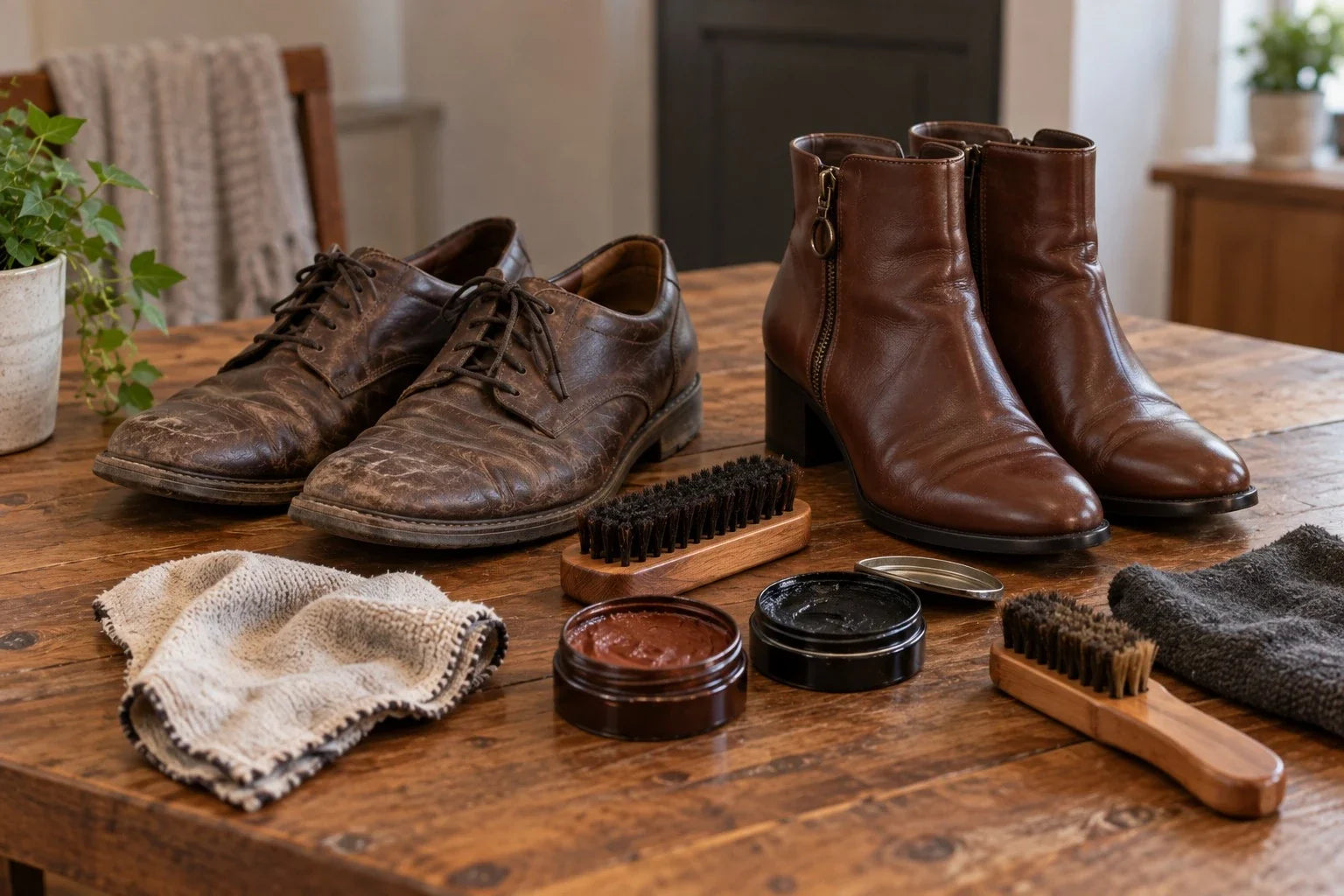
    Men’s leather shoes and women’s ankle boots on a wooden table with shoe brushes, polishing cloths and open tins of shoe polish.

    When you find shoes you love wearing, a little regular care is worth the effort. How you take them off, dry them and put them away can make a difference to how well they hold up.

    Whether it is leather boots for autumn, loafers for work or trainers for everyday wear, start with a few simple habits. Here is our practical guide, with examples from the current collection at Leavys Shoes.

    The essentials
    Clean gently, let shoes dry naturally, give damp pairs time to air and deal with wear before it becomes a bigger repair. Always match the care product to the material and finish.

    Six habits to help your shoes last longer

    1. Undo the fastening before taking them off.Loosen laces, open zips and undo buckles instead of forcing your foot out. Avoid pushing down on the back with your other foot. Use a shoehorn when putting shoes on if it helps your heel slide in without crushing the back.
    2. Deal with dirt gently.Brush away loose, dry dirt with a brush suitable for the upper. Use a soft cloth where appropriate and clean around trims carefully. A metallic panel, suede section or glossy finish may need different care from the rest of the shoe.
    3. Let wet shoes dry in their own time.Blot excess moisture with a clean cloth and open the shoes up to let air circulate. Lightly fill them with plain absorbent paper if needed, replacing it when damp. Keep them away from radiators, hairdryers and tumble dryers, and wait until they are dry inside as well as outside.
    4. Give damp pairs a rest.If you have another suitable pair, alternate while the first airs out. There is no fixed drying time: weather, material and how wet the shoes became all matter. Do not put damp shoes straight into a closed box.
    5. Store them without squashing them.Keep pairs together in a dry, ventilated place away from direct sunlight and heat. A shelf or individual box protects them better than a pile at the bottom of a wardrobe. Use correctly sized shoe trees or light paper stuffing to support the shape without stretching the uppers.
    6. Check small signs of wear.Look at heel tips, soles, stitching, laces and zip pulls regularly. If something is coming loose or wearing unevenly, have it assessed before carrying on in the shoes.

    A routine that fits around your day

    After wearing

    Undo fastenings, check for dirt or dampness and leave the shoes somewhere they can air.

    Once a week

    Look over heels, soles and uppers. Clean marks with a method suitable for the material.

    Before storing

    Make sure the shoes are clean and completely dry. Support the shape and keep pairs apart.

    Choose care by material, not just by brand

    A leather boot and a glossy synthetic loafer need different treatment, even if they come from the same brand. Check the product description and any care label before using a cleaner, cream or protector. Test a new product on a small hidden area first and follow its instructions.

    • Smooth leather: remove surface dirt gently, then use a care product approved for that leather and finish when needed. Leather cream is not suitable for every coated, metallic or patent surface.
    • Suede and nubuck: use a suitable soft brush and specialist care. Keep ordinary shoe polish away from the textured surface.
    • Synthetic and patent-effect uppers: start with a soft cloth and a cleaner approved for the finish. Do not assume leather conditioner is appropriate because the shoe looks like leather.
    • Textile and mixed-material trainers: clean carefully by hand unless the manufacturer explicitly says the exact style is machine washable. A fabric upper alone does not tell you how the rest of the shoe will cope.

    For a fuller explanation, read our shoe care guide for different materials. Manufacturer guidance, such as Tamaris’ care instructions, also separates advice by material.

    A protector does not make every shoe waterproof.
    Use only a product suitable for the upper and finish. For prolonged wet weather, choose footwear specifically described as waterproof rather than relying on a spray to change an ordinary pair.

    Care examples from our current collection

    These four styles show why it helps to check the details. Each was available in several sizes when we refreshed this guide; open the product page for today’s sizes and price.

    Tamaris black leather Chelsea boots with elastic side panels and chunky soles

    Smooth leather · Tamaris

    Black leather Chelsea boots

    A leather upper, elasticated sides and a chunky 50 mm block heel make this a simple autumn style to wear with jeans or dresses.

    Care focus: clean the leather with a suitable product and keep it off the elastic panels. After rain, let the boots dry naturally before putting them away.

    View Tamaris boots
    Caprice burgundy leather trainers with textured panels, laces and side zips

    Mixed finishes · Caprice

    Burgundy RollMotion trainers

    These leather trainers combine tonal metallic and textured panels, an H wide fit, adjustable laces and a side zip.

    Care focus: check that a cleaner suits each finish before applying it. Open the zip fully and adjust the laces as needed instead of forcing your foot past the heel.

    View Caprice trainers
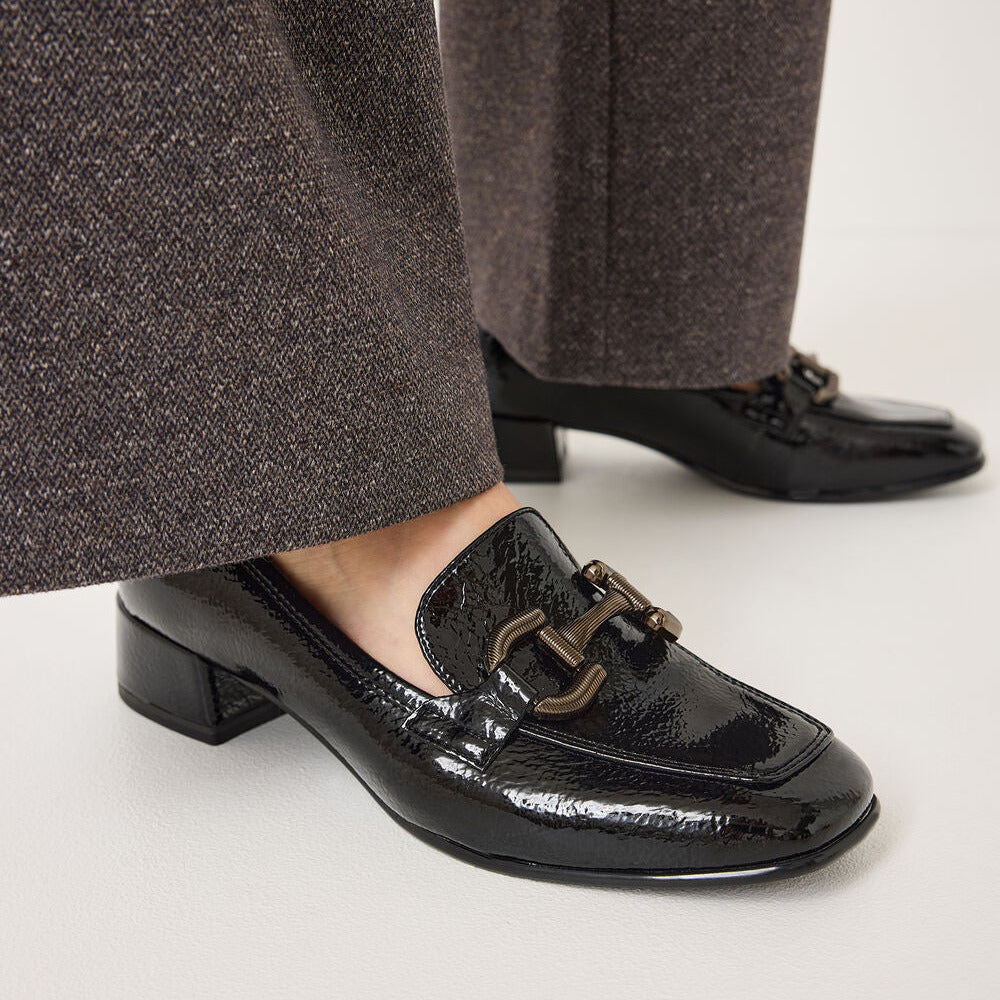
    Jana black patent-effect loafers with tonal chain trim and a low wedge sole

    Patent-effect synthetic · Jana

    Black wide-fit chain loafers

    A glossy synthetic upper, H wide fit and 30 mm wedge sole give these loafers a smart finish for work or everyday outfits.

    Care focus: use a soft cloth and a product suitable for synthetic patent finishes. Store the pair so other shoes and buckles cannot scrape against the glossy uppers.

    View Jana loafers
    Marco Tozzi cognac croc-effect loafers with gold-tone trim and block heels

    Glossy synthetic · Marco Tozzi

    Cognac croc-effect loafers

    These synthetic loafers have a croc-effect finish, a 35 mm block heel and a cushioned FEEL ME footbed.

    Care focus: wipe gently around the texture and trim. Check the heel tips for wear, and avoid treating the synthetic upper with products intended only for uncoated leather.

    View Marco Tozzi loafers

    Stock checked on 20 September 2026. Availability can change. Fitting and material details apply to these individual styles.

    When is a repair worth considering?

    A shoe repairer can assess worn heel tips, loose stitching, damaged fastenings or sole wear. Taking a pair in early gives you a clearer idea of what is possible before further wear makes the job more difficult.

    Not every sole can be replaced, and not every damaged upper can be restored. Ask what the repair involves and whether the rest of the shoe is in good enough condition to make it worthwhile. A thick sole or a particular brand name alone does not tell you whether a shoe is repairable.

    Common questions

    Can I put trainers in the washing machine?

    Only when the manufacturer confirms that the exact pair is machine washable. Leather, trims, adhesives and internal parts may need different care. If there are no clear washing instructions, choose gentle hand cleaning suited to the materials or ask for advice.

    How often should I polish leather shoes?

    There is no single timetable for every pair. Look at the condition of the leather and follow the care product’s instructions. Clean dirt off first, use a small amount when needed and check that the product suits the finish.

    How can I keep the inside fresh?

    Let shoes air between wears and make sure they dry fully. If insoles are designed to come out, remove and care for them as instructed. Use only a shoe freshener suitable for the lining; it should not replace drying and cleaning.

    How many years should a pair of shoes last?

    There is no honest fixed promise. How often you wear them, where you walk, the construction and how you care for them all matter. Regular checks help you judge whether the shoes are still in good condition or need attention.

    Originally published 18 April 2024. Refreshed 20 September 2026 with updated advice and current product examples.

    1 Response

    Brad Gamble
    Brad Gamble

    17 May, 2024

    Great post! Thanks for sharing these valuable tips. Extending the life of shoes not only saves money but also reduces waste. Have you seen these models https://www.aquila.com.au/suede-nubuck-shoes ?

    Leave a comment


    Also in Shoe Styling

    Marco Tozzi burgundy suede-effect block heel ankle boots styled with a cream knitted dress
    How to Wear Ankle Boots with Jeans, Trousers and Dresses

    5 min read

    Easy ways to wear ankle boots with jeans, tailored trousers, dresses and skirts. Explore autumn outfit ideas and current Jana, Caprice, Tamaris and Marco Tozzi styles at Leavys Shoes.

    Jana chocolate brown ankle boots with gold-tone buckles, worn with brown tights and a camel skirt
    Shoe Care Guide: Leather, Suede, Patent & Synthetic Shoes

    5 min read

    A practical guide to caring for leather, suede, patent-effect and synthetic shoes, with examples from our current Jana, Caprice, Tamaris and Marco Tozzi collections.

    Marco Tozzi dark red patent-effect loafers with gold-tone trim, worn with grey trousers
    How to Tell if Your Shoes Fit Correctly: A Practical Guide

    5 min read

    Check toe room, width and heel fit with our practical try-on guide, featuring current styles from Jana, Caprice, Tamaris and Marco Tozzi.