Women’s footwear · Leavys Shoes
Unisa size & fit guide
Unisa advises that fit can change with the model, material and last. Use the guide as a starting point and check the shape of the particular pair.
Size chart
Unisa’s size ranges and foot lengths are shown below. Use your longer foot measurement as a starting point. Half sizes are available in selected styles only.
Use the length of your longer foot, measured while standing. Do not use the length of an insole. Measure your feet
| EU | UK | Foot length (cm) |
|---|---|---|
| 35 | 2 | 22.7 |
| 36 | 3 | 23.3 |
| 36.5 | 3–4 | 23.7 |
| 37 | 4 | 24 |
| 37.5 | 4–5 | 24.3 |
| 38 | 5 | 24.7 |
| 38.5 | 5–6 | 25 |
| 39 | 6 | 25.3 |
| 39.5 | 6–7 | 25.7 |
| 40 | 7 | 26 |
| 40.5 | 7–8 | 26.3 |
| 41 | 8 | 26.7 |
| 42 | 9 | 27.3 |
Use the sizes offered on your chosen product. A brand chart may include sizes that are not available in every style.
A chart comparison is a starting point, not a guarantee of fit. Check the style’s width and the sizes available before ordering.
How Unisa shoes fit
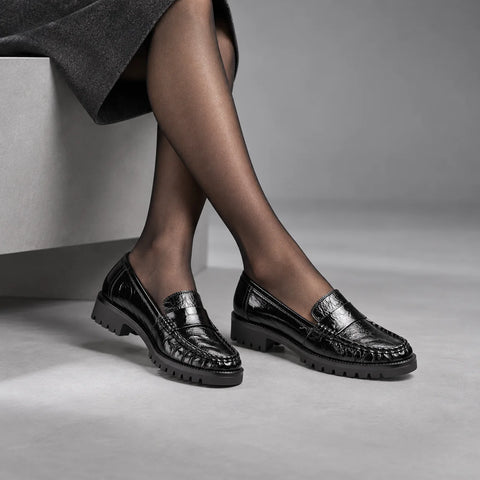
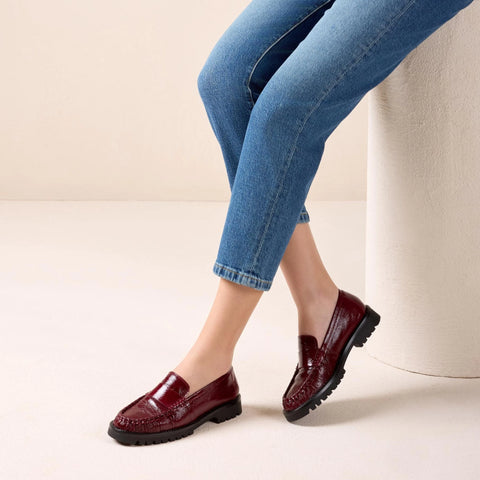
- Loafers: For styles such as Fijo, check how the upper holds your instep and heel. A slip-on should stay secure without having to choose a size that compresses the toes.
- Courts and Mary Janes: Check space across the ball of the foot. A Mary Jane strap helps hold the instep but does not change the shoe’s length or sole width.
- Espadrilles: Fasten the ankle strap comfortably and check that both heel and toes sit within the footbed. Compare both feet while standing.
Between sizes?
If you are between sizes, tell us the Unisa model and material, such as suede or patent. We can help you choose for that design rather than applying one rule to the whole brand.
Brand guidance is a starting point. Product-specific details and the way the shoe holds your foot also matter.
How to measure your feet →When your shoes arrive: a quick fit check
Try them indoors on a clean surface before deciding to keep them.
- Try both shoes. Wear your usual socks or tights and any insoles you intend to use. Adjust the fastenings.
- Check toe room. Your toes should move comfortably, without pressing against the front or being squeezed at the sides.
- Take a few steps. Check for persistent heel slipping, rubbing or pressure across the top of your foot.
- Something feels wrong? Ask us before wearing them outside. A different width or shape may help more than changing size.
How to measure your feet
- Place a sheet of paper on a hard, level floor with one edge against a wall. Wear the socks you plan to wear with the shoes.
- Stand with your heel gently against the wall and your weight on the foot. Have someone mark the end of your longest toe, keeping the pencil upright.
- Measure from the wall edge to the mark in centimetres. Repeat for your other foot and use the longer measurement. Measuring towards the end of the day can be helpful.
Only compare this measurement with a chart labelled foot length. An insole or shoe measurement may include extra space and is not interchangeable. Do not add an allowance unless that brand’s instructions specifically say to.
How to measure your feet →